Helm
Helm takes the notes on senior-living sales calls, so the salesperson can listen.
- Role
- Product designer & builder
- Team
- A founder, one engineer, two people on ads and sales, and me
- What I did
- Design on all four products, the Helm landing page and demo in code, the legal product end to end, the user research, and how we test ideas
- Built with
- Figma, Next.js, Supabase, Claude Code
at helmexec.com, with a demo I built
from my prototype to the matching production app
checked with customers in 46 days, 8 dropped
Faves, a consumer app, also runs a small venture studio, and I design its products and build some of them. Helm is the fourth and the one that’s live. This page starts there, then goes back through the three before it.
Helm
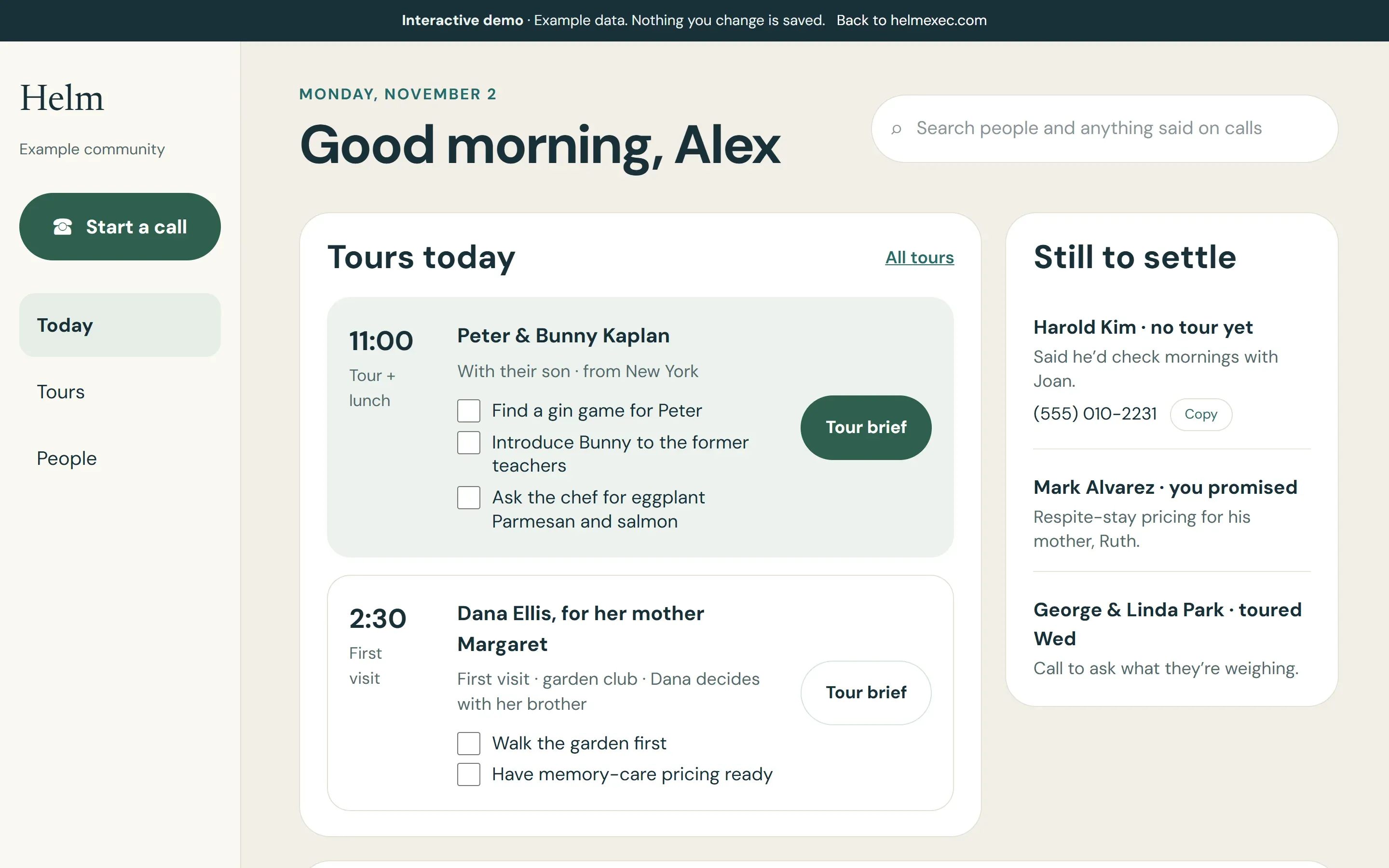
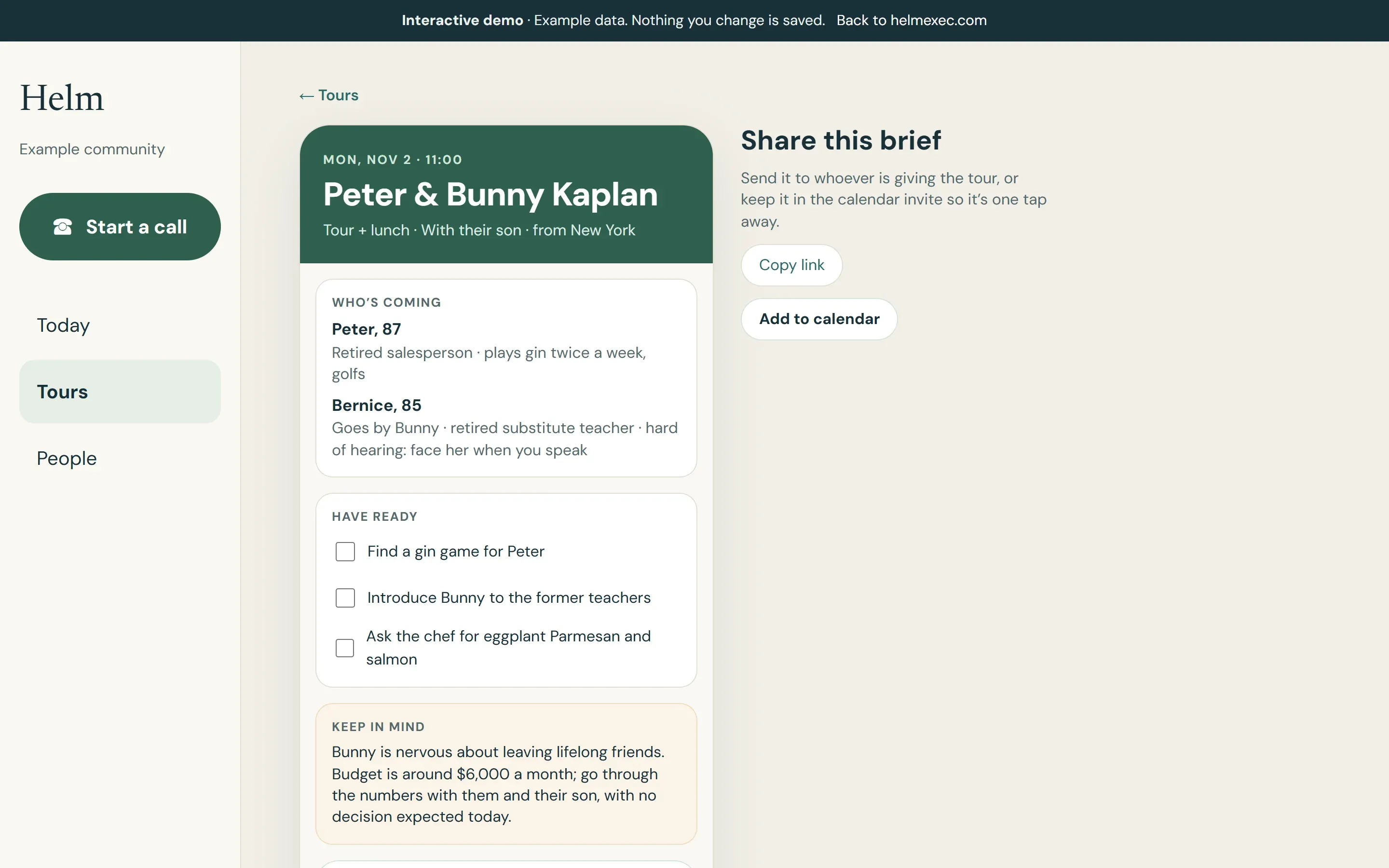
Sales directors at senior-living communities take calls from families all day, and on every call they choose between listening and typing. Helm listens and takes the notes. It writes down who is calling and for whom, the care needs and the budget, suggests the next question to ask, and turns it all into a profile of the family for the tour.
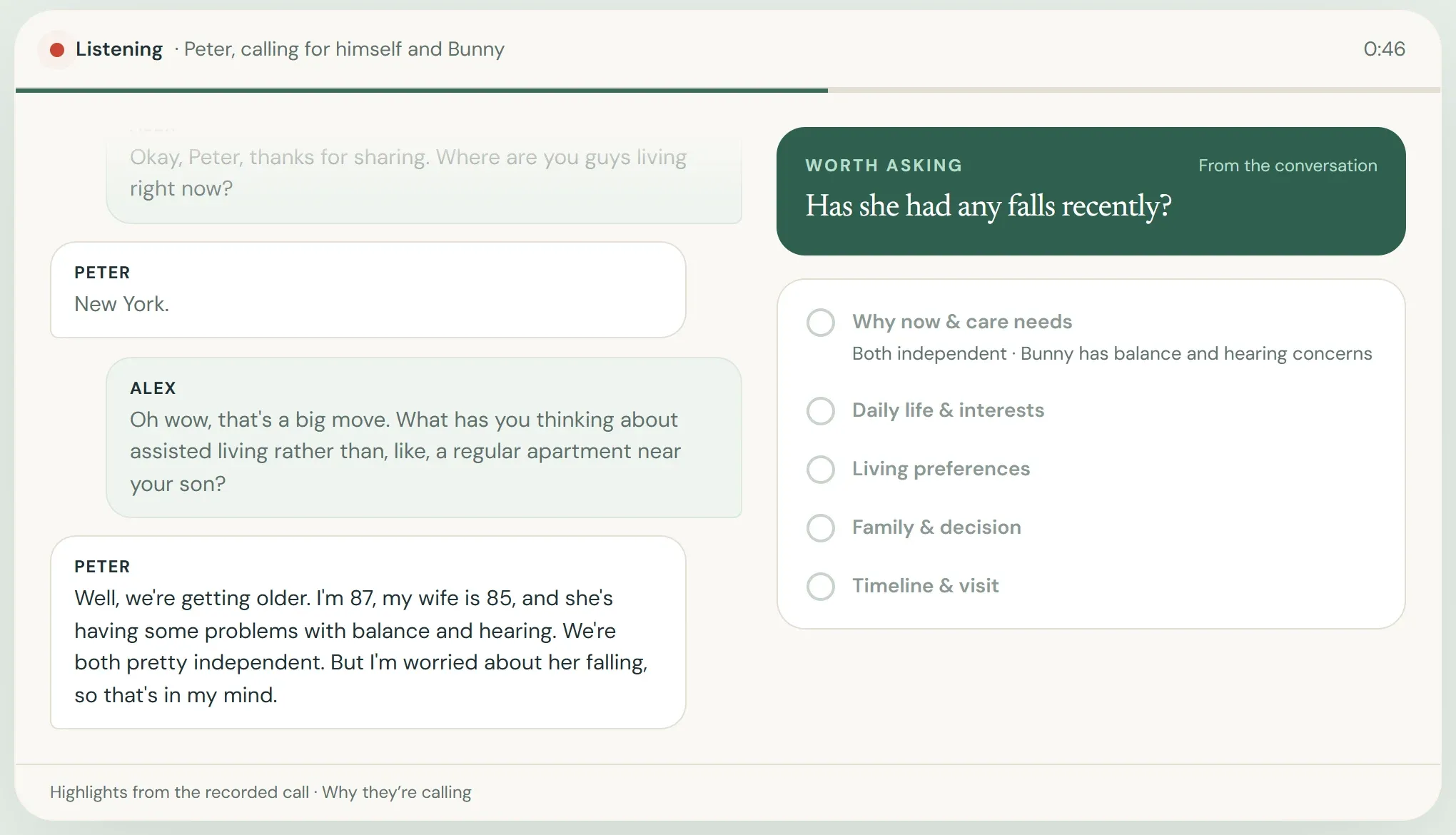
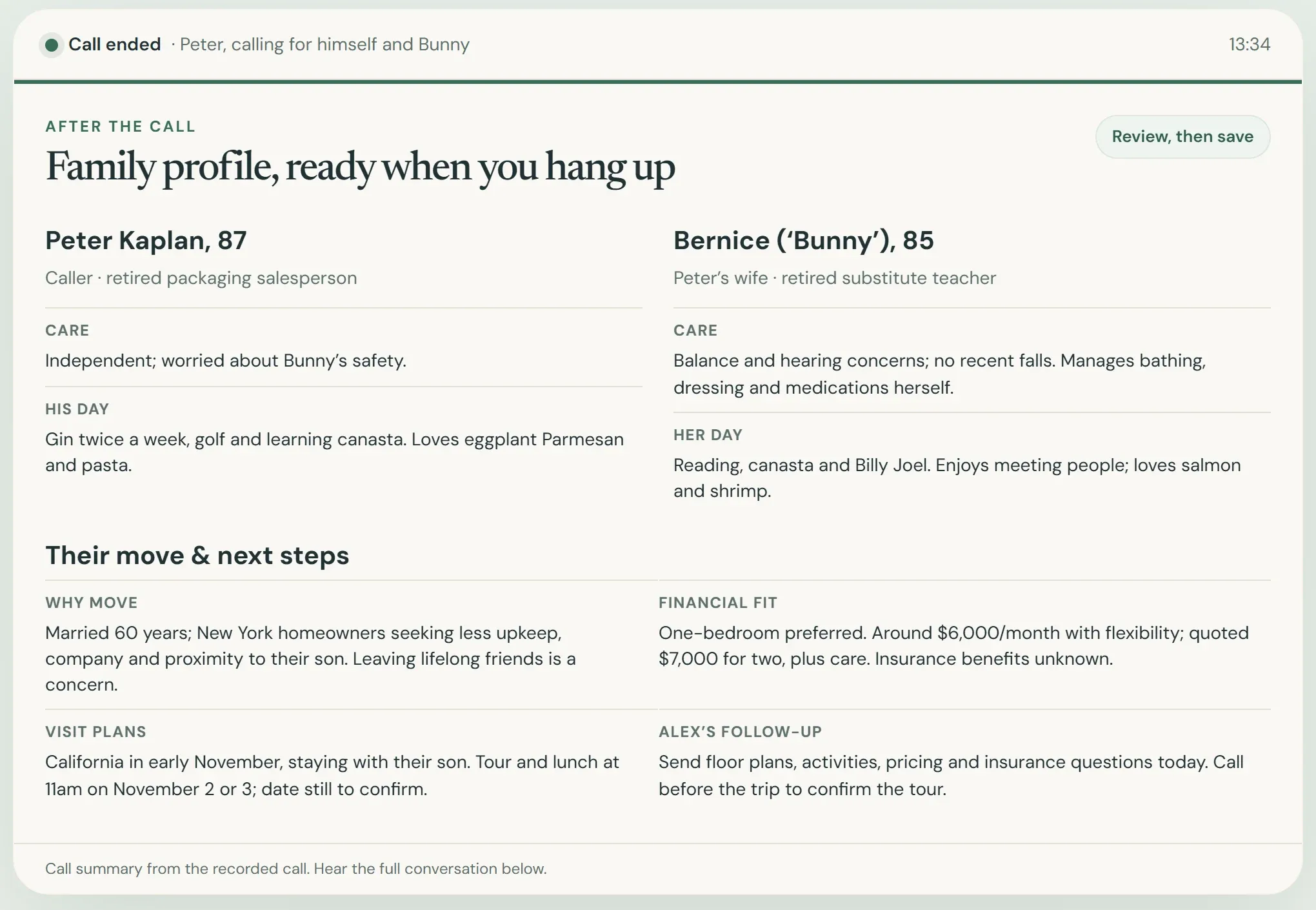
I designed Helm, then wrote its landing page and a clickable demo in the codebase, with example data for one community. The demo was the spec. The engineer built the real app behind it, the calls, the database and the voice, and within a week matched its screens to the demo.
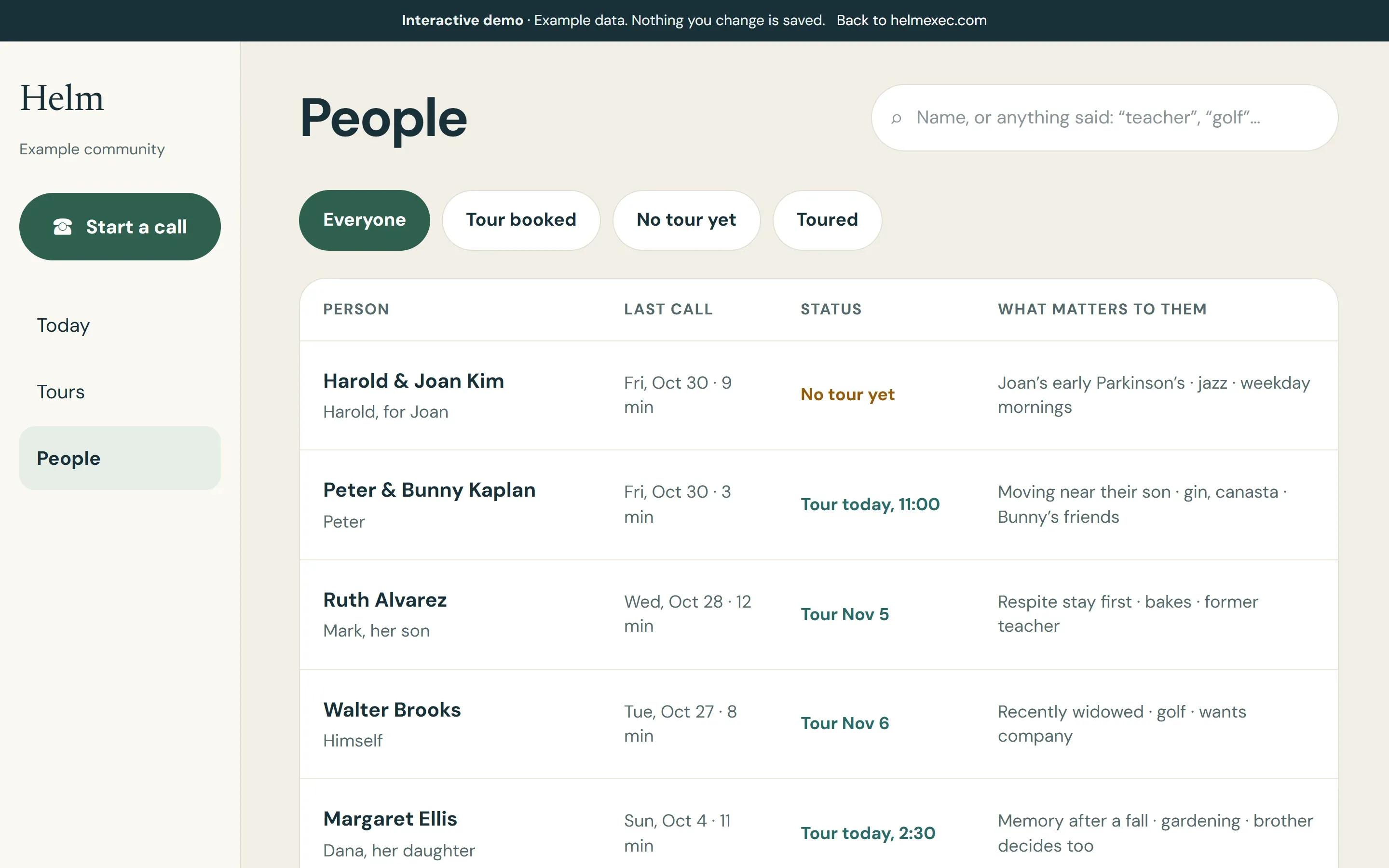
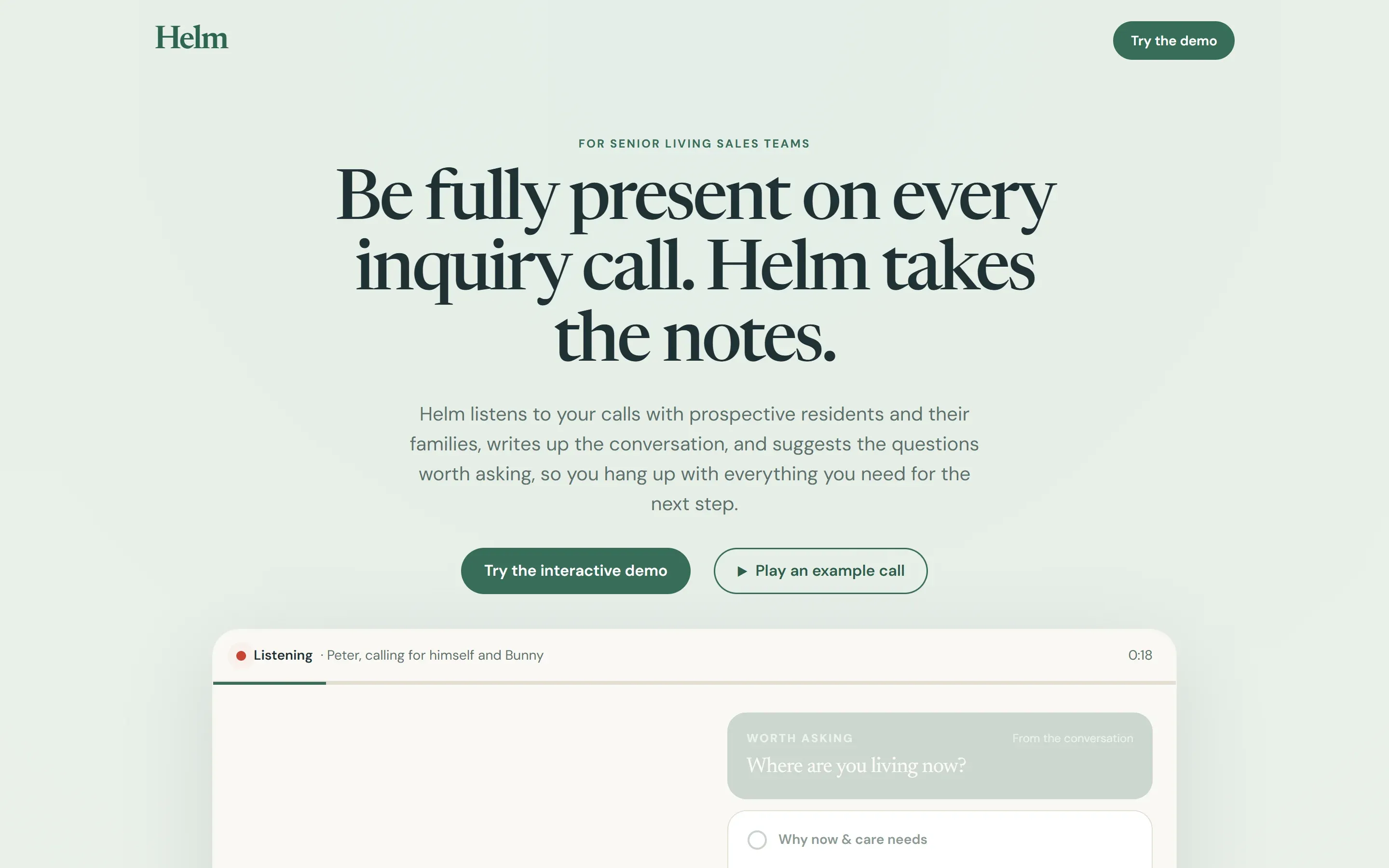
Helm is on free pilots with a small number of communities.
The three products before it
Helm is the fourth product in a bit over a year. I designed all four and built two, and each one changed how we work.
The first was an AI tool for creators and marketers. You give it a topic, it finds what works on short video and turns it into concepts and storyboards. I redesigned a quick prototype into three steps, research, concepts and storyboard, and tested it in Figma with three moderated sessions before anyone built more. People liked the research step most. The concepts read as written by AI, and nobody wanted text-only storyboards. A week after my report, the product was cut down to the research step.
The first product we called Helm, in May 2026, was an AI chief of staff for startup CEOs. I designed it straight in code, a clickable landing page, onboarding and dashboard, and eleven days later the engineer had rebuilt production to match. We worked the same way on today’s Helm. Nobody outside the team really used that first version, so we stopped it in July and kept the name for the senior-living product.
Around the same time I built a legal-intake product end to end. A client tells their story to a guided AI intake, it becomes a summary of the case, and the attorney reads that instead of spending a first call on it. Every commit in that repo is mine.
- Day 1PrototypeBuilt for one attorney, with a real database and email by the evening.
- Week 5PilotA real law firm, an attorney and a client, on a real matter.
- Week 6Three landing pagesOne promise each. Privacy won, and the people who came weren’t law firms.
- Week 7A new product, then paidFor people handling a sensitive legal matter on their own. Live, with people paying.
- Week 10Left runningPeople paid, but few came back after their first week. It stays up, without more investment.
On day one I had a working prototype for one attorney, with a real database and email by the evening. Four and a half weeks in, a real law firm piloted it with a client on a real case. It went quiet almost right away, so before building more I put up three landing pages, each with one promise, to see which one brought people in. Privacy won, and most of the people who got in touch were dealing with their own legal trouble.
So we turned it into a product for people handling a sensitive legal matter on their own. The paid version went live seven weeks after the first commit. About one in three trials turned into a paying customer, and almost nobody who paid came back in their first week. People in distress get their answer and leave. In week ten we stopped investing in it and left it running.
How we decide what to build
After the legal product I proposed that we check every idea with customers before building it, one idea a week for 90 days, and I run that sprint. On Monday the idea goes on a half-page card with six questions. Tuesday to Thursday we talk to people who have the problem. On Friday we decide to go, wait or drop it, and write down why.
- MonWrite the idea downHalf a page, six questions. If it doesn’t fit, the idea isn’t clear enough yet.
- Tue–ThuTalk to people who have the problemCalls, messages, quick landing pages, and a prototype when talking isn’t enough.
- FriGo, wait or dropWe write down the decision and the evidence, so everyone can see why.
- Who
- One specific kind of customer
- The pain
- What hurts badly enough to act on this week
- Current way
- How they cope today, and what it costs
- New way
- What we’d put in their hands instead
- Why much better
- Why it’s not just a little better
- Money
- Who pays, how much, and why now
Then we try hard to break it: the market, the angle, the risks, every reason it could die. It gets a score from 0 to 100, and under 55 we don’t build it.
That test also found a rule in a partner platform’s terms that would have broken the product as planned.
Every test gets a deadline. If we haven’t run it by then, we drop the idea.
Don’t ask people to confirm a problem that makes them look bad at their job. They won’t.
In the first 46 days we checked more than 20 ideas and dropped 8 on what customers told us, the first time this team dropped an idea before building anything. Senior living was one of the ideas. It’s the one that’s live.